Elephant with Safari Scene Layered Svg Review
As a designer who spends more time staring at stitch maps than most people care to admit, I approach every new machine embroidery design with a mix of excitement and skepticism. When I first pulled up the Elephant with Safari Scene Layered Svg, my initial reaction was one of visual appreciation. There is a distinct charm to safari-themed motifs; they evoke a sense of adventure and warmth that translates beautifully into home decor and custom apparel. However, seeing a vector on a screen is vastly different from watching a needle punch through fabric. This review breaks down how this specific asset holds up when moved from the digital realm of Laser Cutting and CNC projects into the tangible world of thread and cloth.
First Impressions: Mood and Visual Personality
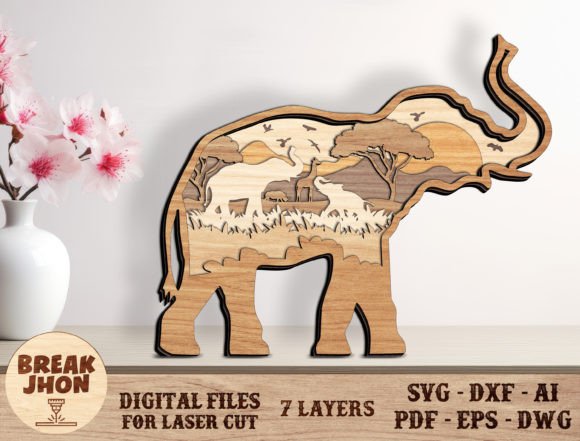
The immediate standout feature of the Elephant with Safari Scene Layered Svg is its compositional balance. Unlike many clip-art style images that feel flat or disjointed, this design offers a layered depth that suggests a story. The silhouette of the elephant anchors the piece, while the surrounding safari elements create a natural frame. For an embroidery project, this layout is promising because it allows for creative interpretation of thread colors. You aren't just stitching a shape; you are building a scene.
The mood is gentle yet bold, making it versatile. It doesn't scream "nursery" so loudly that it can't be used on a grown-up's tote bag, nor is it so abstract that it loses its appeal on a baby onesie. The lines appear clean in the preview, which is crucial. In embroidery, messy lines translate to jagged stitches. If the vector paths are smooth, as they appear here, the resulting satin stitch or fill stitch work should lay down cleanly without excessive jumping or trimming.
Real-World Application: From Screen to Stitch
To truly test the viability of this design, I imagined a specific real-life scenario: creating a custom embroidered tote bag for a boutique client who specializes in eco-friendly travel gear. The goal was to produce a handmade product that felt high-end but retained a whimsical touch. Using the Elephant with Safari Scene Layered Svg as the central motif, the potential is significant.
For custom apparel like sweatshirts or t-shirts, this design shines because of its scalability. A large back print on a hoodie could utilize the full detail of the safari scene, allowing for rich color blending in the foliage and the elephant's texture. Conversely, scaling it down for a pocket logo on a cap requires careful attention. While the original product description highlights its suitability for Signs and laser cutting, adapting it for embroidery means respecting the limits of the thread. Thick lines will hold up well on a tote bag design made of canvas, but the finer details of the background scenery might need simplification if you are working with a small hoop size.
I also see strong potential for baby embroidery. The soft curves of the elephant make it an ideal candidate for nursery decor, such as pillow covers or blankets. When executed with soft pastels or classic earth tones, this embroidery file can elevate a simple muslin blanket into a cherished heirloom. For Etsy sellers looking to expand their catalog beyond standard monograms, offering a themed collection based on this asset could drive engagement, especially during seasons where nature-inspired gifts are popular.
Technical Considerations and Fabric Challenges
While the aesthetic is solid, practical application requires a critical eye toward technical constraints. One major consideration is stitch density. Vector files intended for laser cutting often have solid fills that, if directly converted to embroidery without adjustment, can result in a cardboard-like stiffness. Before committing to a final finished product, it is essential to test the design on scrap fabric. You need to ensure that the fill areas aren't too dense, which can cause puckering, especially on stretchy fabrics like jersey knits used for sweatshirt embroidery.
Fabric texture plays a massive role here. On a smooth cotton twill, the details of the safari scene will pop. However, on textured fabrics like linen or heavy denim, fine running stitches might get lost. If you plan to use this on dark fabric, remember that the design relies on contrast. You may need to add a layer of white underlay or adjust the thread colors to ensure the elephant doesn't blend into the background. Furthermore, curved surfaces like caps present a challenge. The horizontal expanse of the safari scene might distort on a structured cap unless the design is digitized specifically for that curvature.
Another point of caution involves small details. If the vector includes tiny leaves or intricate patterns near the elephant's feet, these might not translate well to thread. In embroidery, anything smaller than a few millimeters can become a snag point or simply disappear after washing. For products that need frequent washing, such as kitchen towels or aprons, you must verify that the stabilizer used is robust enough to support the weight of the design without tearing the fabric over time.
Commercial Value and Brand Consistency
For creative entrepreneurs and small shop owners, the value of a design asset lies in its ability to build brand consistency. The Elephant with Safari Scene Layered Svg offers a cohesive look that can be adapted across various merchandise. Imagine a cohesive line featuring this design on a patch, a wall hanging, and a reusable shopping bag. This consistency builds customer trust and recognition.
When selling personalized gifts or commercial embroidery items, the perceived value is tied to the quality of the execution. A clean, well-stitched elephant scene suggests professionalism. It tells the buyer that care was taken in the creation process. However, this hinges on the digitization. Since the source material is described as a vector drawing suitable for CNC and laser cutting, it is not inherently an embroidery file. You cannot simply load an SVG into a machine and expect perfect results. It must be digitized by someone who understands stitch direction, pull compensation, and underlay settings.
Practical Notes for the Maker
If you decide to move forward with this design for your next project, keep these practical steps in mind:
- Test First: Always stitch out a sample on scrap fabric similar to your final material. Check for puckering and registration issues.
- Check Contrast: View your mockup in black and white to ensure the layers of the safari scene distinguish themselves clearly without relying solely on color.
- Verify Licensing: The product description mentions "DIGITAL DOWNLOAD" and "Temporary prediction," which is vague. Before selling any small shop product or listing this as a design asset, confirm the license terms. Ensure you have the right to use it for commercial purposes.
- Stabilizer Selection: Match your stabilizer to your fabric. Cut-away is usually best for stretchy garments, while tear-away works for stable woven fabrics like those used in signs or wall art.
- Detail Inspection: Zoom in on the smallest elements. If a detail looks too thin in the vector, it will likely break in the thread. Be prepared to simplify or omit micro-details during the digitizing phase.
In conclusion, the Elephant with Safari Scene Layered Svg is a visually compelling asset with strong potential for both personal and commercial use. Its strength lies in its narrative quality and adaptable composition. However, its success as an embroidery project depends entirely on the skill of the digitizer and the preparation of the maker. By respecting the limitations of thread and fabric, and by treating the vector as a blueprint rather than a final stitch map, you can transform this digital drawing into a stunning physical reality that resonates with customers and enhances your portfolio.